
Skip to content
Free public experiment · Locally Tested Experimental V1

Author in a Shell

A small collaboration kit for one human author, one file-capable orchestrator, and one separate creative-writing conversation.

Create together what none could create separately or alone.

No royalties. No ownership claim. No promise of publication, quality, income, or completion time.

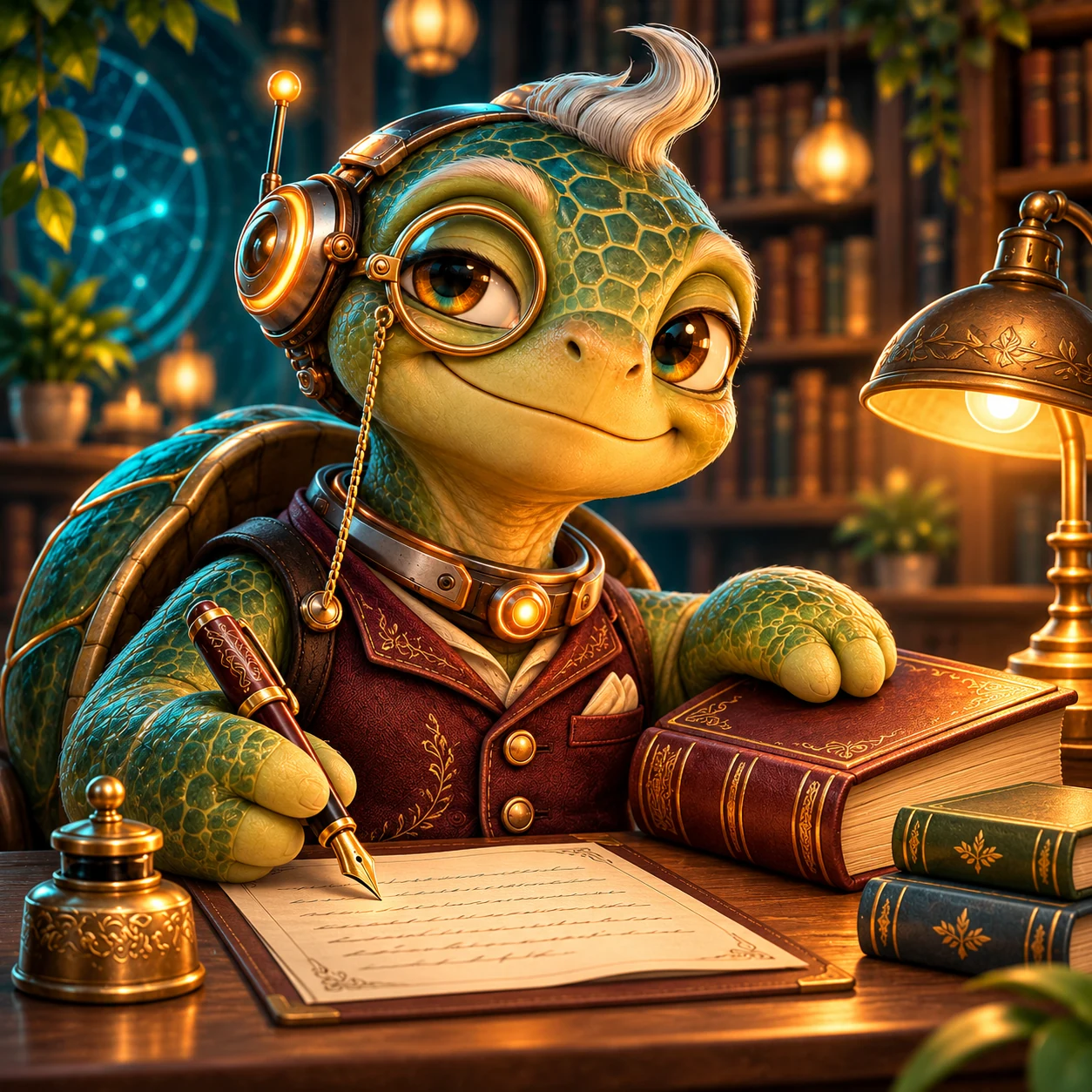
Little Oogway at a writing desk wearing a monocle and resting one hand on a newly bound book
Little Oogway has reviewed the footnotes and finds them acceptable.
Why we built it

A conversation is working context. It is not the archive.

During our four-book experiment, completed-looking work became difficult to locate because its storage state was unclear. We recovered it. Then we built the process we wished we had used from the beginning.

Author in a Shell writes every real artifact to a predictable folder, records its size and SHA-256 checksum, separates creative approval from storage facts, copies the control records with the work, and reconstructs project state without trusting conversation memory.

The smallest useful team

Distinct roles. One recoverable loop.

01

The human author

Supplies intention, lived experience, taste, boundaries, corrections, and the final word.

02

The orchestrator

Manages files, checksums, decisions, backups, recovery, and production. It never silently rewrites the story.

03

The creative partner

Develops ideas and prose in a separate conversation. It never claims that anything was saved or approved.

04

The cold reviewer

Reads only the saved brief and work, then separates required corrections, taste, and dissent. The human decides.

What we can honestly claim

Locally tested. Publicly unproven.

Codex operated the local acceptance test from the Round Table specification. That proves the behavior observed on this machine. It does not establish broad reliability or independent public success.

10focused code tests
5deliberate fault injections
880words in the bounded scene
1project deleted, then recovered from backup
The loop

Brief → draft → save → review → decide → final save → backup → verify.

Start with decisions. The kit surfaces what the author forgot to specify—voice, spacing, continuity, accessibility, rights, images, front and back matter, metadata, formats, links, pricing, backups, and publication gates. Missing decisions stay visible as UNKNOWN.

Save the actual words. The creative conversation proposes text. The orchestrator writes the file, measures the bytes, computes the checksum, and records the event.

Make backups prove themselves. A complete generation carries the artifacts, control records, exact helper, and a completion marker written last. A changed file makes stale confirmation visible.

Recover from evidence. A fresh agent can inventory verified files, distinguish unsupported summaries, and stop at the next required human decision.

Free download

Take the kit. Break it carefully. Tell us what happened.

The starter archive contains the helper, prompts, manual fallback, style and omission cards, test fixture, licenses, and exact local test report. The separate audit archive preserves the full Round Table record.

Three-minute orientation

Open, copy, begin.

  1. Read QUICKSTART.md.
  2. Give START_ORCHESTRATOR.md to your file-capable local agent.
  3. Complete the decision, style, and omission cards before asking the separate creative chat to draft.

No Python? Use MANUAL_FALLBACK.md. The safety claims become weaker only when the evidence does.