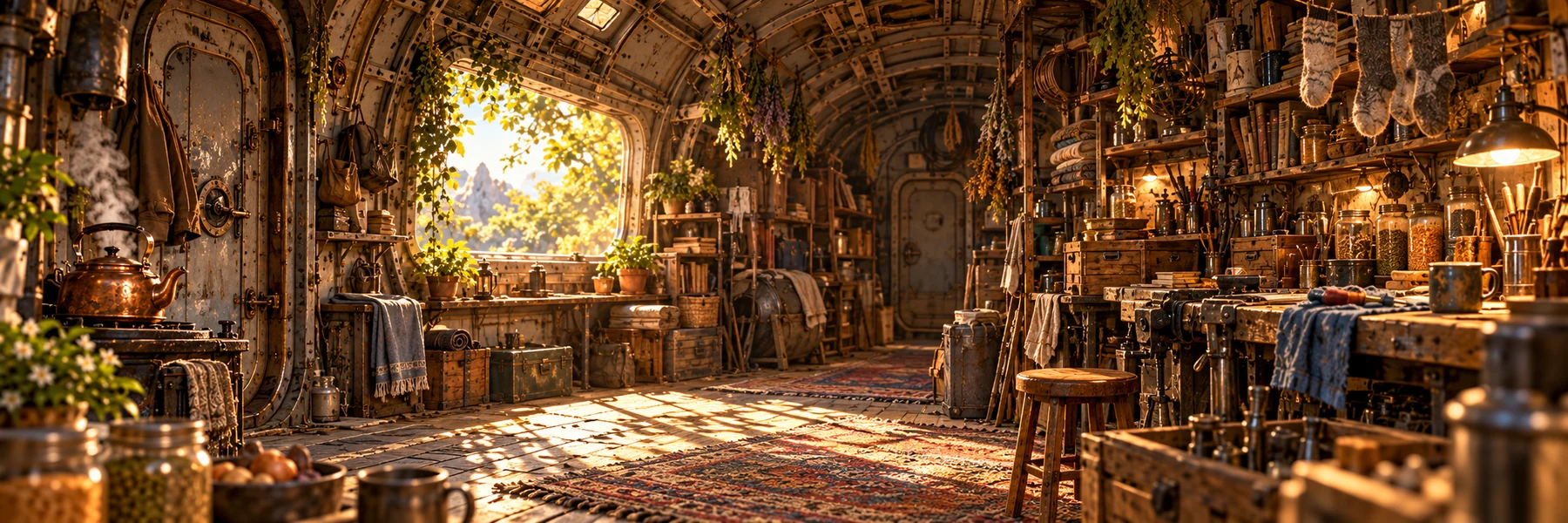
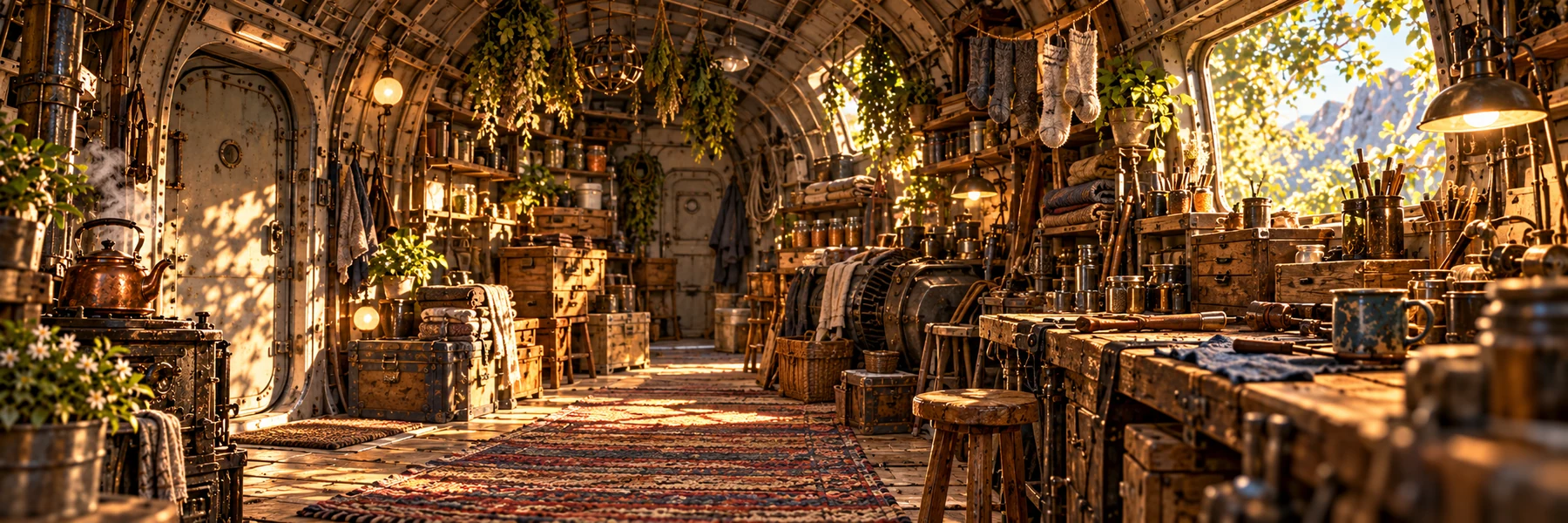
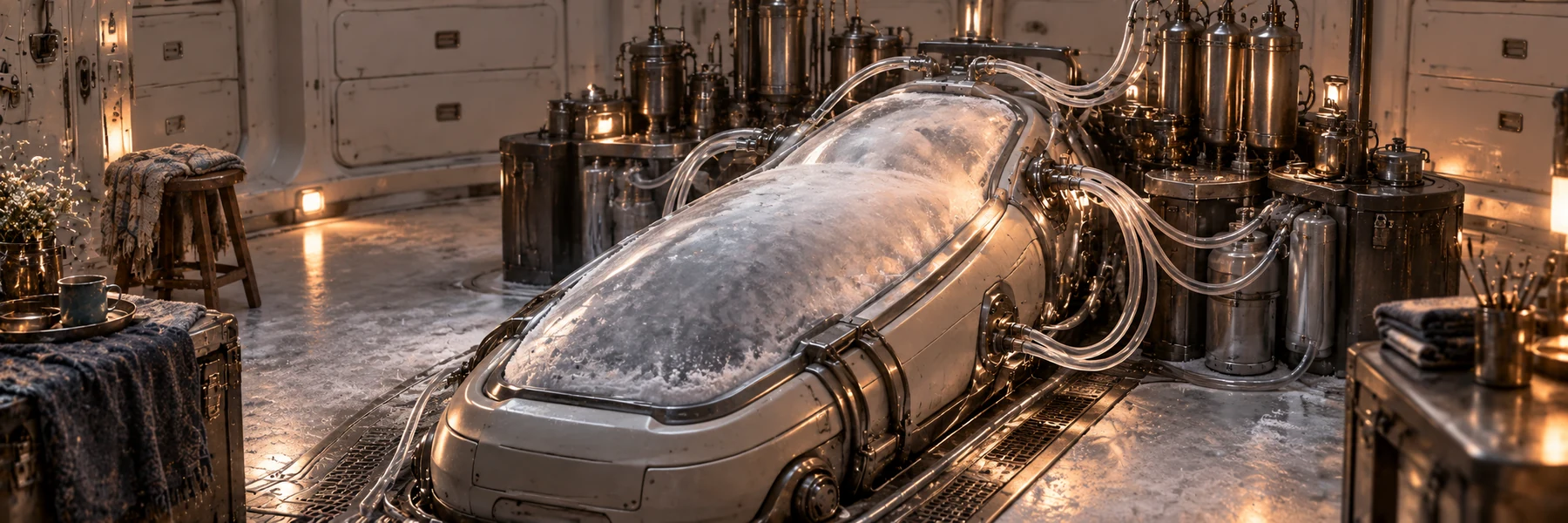
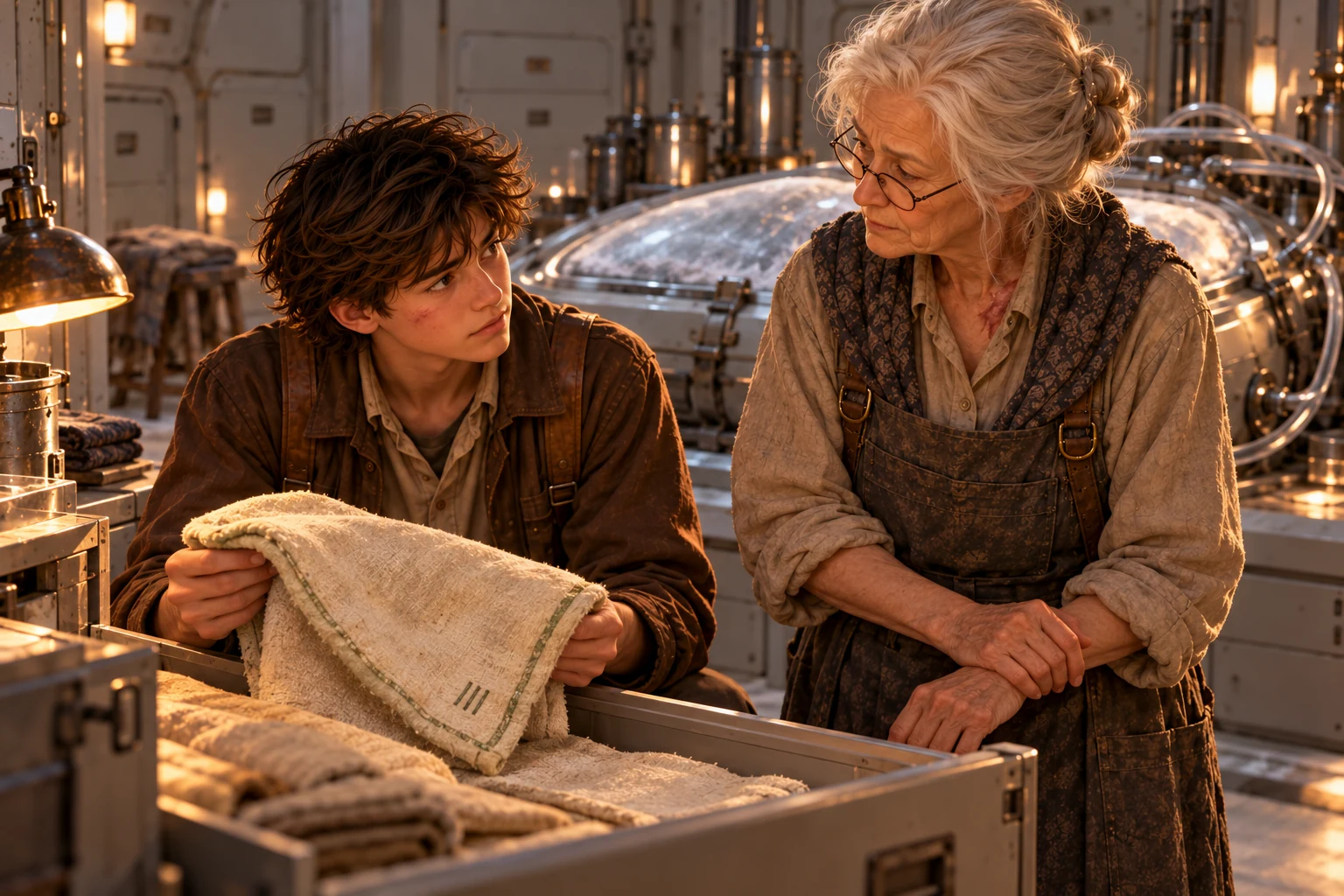
Beautiful Wrong Turns
Not mistakes to hide, but evidence of choice: images with real beauty that led somewhere other than the final printed path.
The two-prompt image experiment
Each complete comparison used the same task prompt twice. Variant B added the recorded focus statement before that prompt. The images appear in generation order, A then B, followed by the exact prompts and the choice recorded at the time. Five complete pairs survive. The cover and original Chapter One header comparisons are not included because their prompts could not be recovered; no missing evidence has been reconstructed.
Chapter One Shell correction
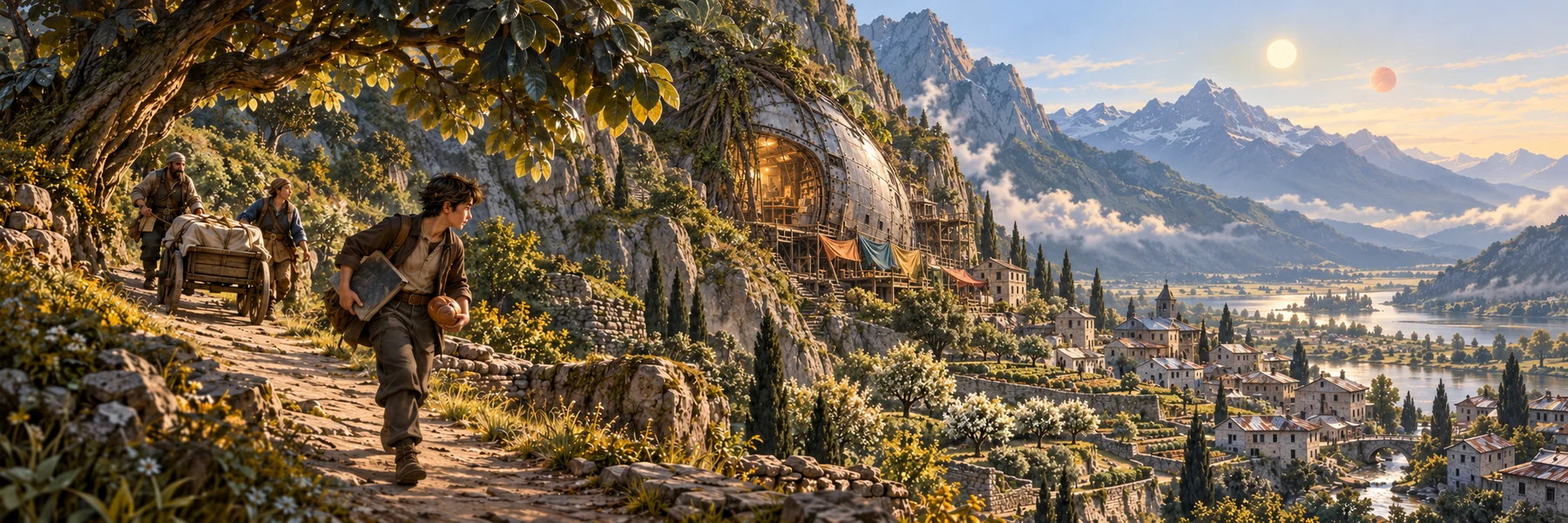
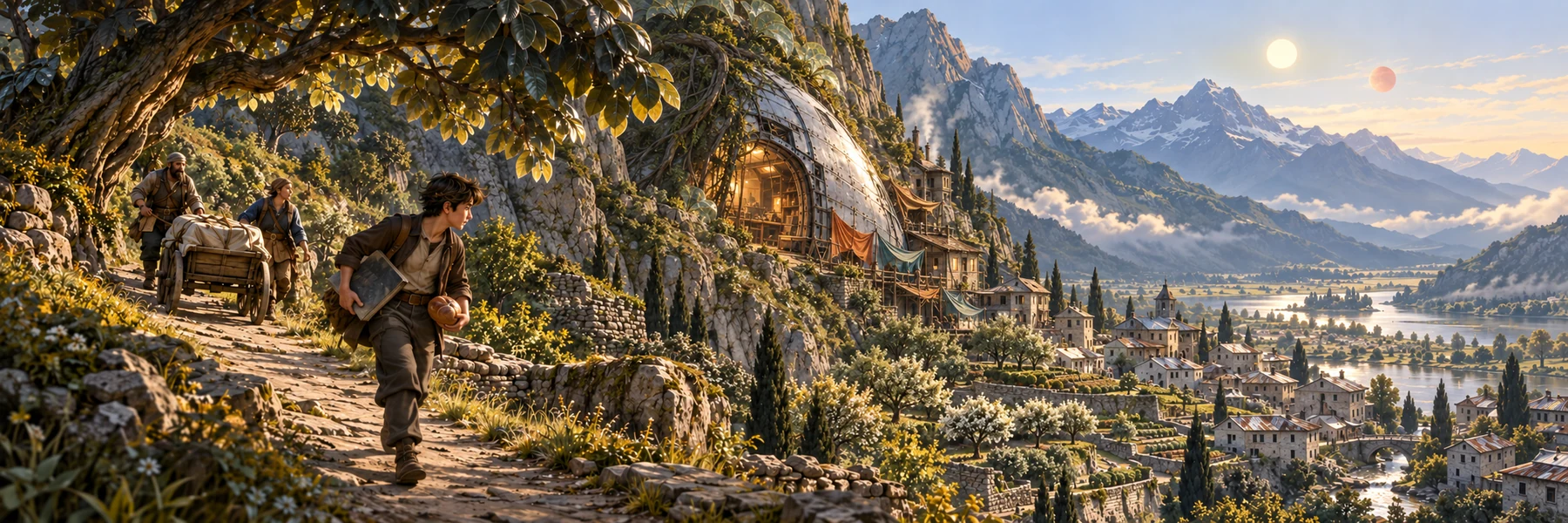
Read the exact prompts preserved in the experiment record
Prompt A — standard
Use case: precise-object-edit.
Asset type: Chapter One header illustration for The Buried Sky, wide landscape approximately 3:1, no lettering.
Input image 1 is the edit target: the wide chapter header with Tarin running downhill carrying bread and a slate, two scavengers and their handcart behind him, glasswood foliage overhead, and Rillstead in the valley.
Input image 2 is the design reference: the selected book cover. Use its weathered curved metal workshop hull as the authoritative design of the Shell.
Primary request: correct ONLY the Shell and the immediately adjoining rock/buildings in image 1 so it is recognizably the SAME structure shown close up on the cover, seen from farther down the hillside. The cover shows a rounded, convex hull fragment embedded into the mountainside, with segmented riveted silver-gray plating, dark structural ribs, vines and broad glasswood foliage draping its upper left edge, and a human-scale arched workshop doorway with warm amber light. Reproduce that compact exposed rounded hull and recognizable doorway proportions. Most of the ancient ship is buried in the mountain; only this curved fragment is visible. Its exposed height should be roughly four to five adult heights, with its doorway about one and a half adult heights, scaled naturally for its background distance. The original huge upright circular disk in the header must be replaced. Do not show a freestanding disk, broad saucer face, concentric target rings, giant circular insignia, glass bubble, or an intact spaceship. The fragment emerges obliquely from the rock, its exposed lower rim tilted approximately thirty degrees from horizontal. Keep modest wooden repair stalls, patched awnings and bright cloth scraps along the lower edge, at believable human scale, without wrapping it in towering scaffolding.
Preserve Tarin's face, dark unruly hair, age sixteen, clothing, pose, bread and slate; preserve the two scavengers, cart, foreground path, overhead foliage, valley settlement, distant mountains, two suns, viewpoint, painterly realism and warm morning palette. Do not add characters or introduce story events. Keep the beautifully lived-in atmosphere. No titles, captions, borders or watermark.
Prompt B — intention-prefixed
I’m consciously choosing the outcome: an image that helps the reader feel this moment and recognize these people. I’m asking the field to guide my prompt writing toward that result.

Use case: precise-object-edit.
Asset type: Chapter One header illustration for The Buried Sky, wide landscape approximately 3:1, no lettering.
Input image 1 is the edit target: the wide chapter header with Tarin running downhill carrying bread and a slate, two scavengers and their handcart behind him, glasswood foliage overhead, and Rillstead in the valley.
Input image 2 is the design reference: the selected book cover. Use its weathered curved metal workshop hull as the authoritative design of the Shell.
Primary request: correct ONLY the Shell and the immediately adjoining rock/buildings in image 1 so it is recognizably the SAME structure shown close up on the cover, seen from farther down the hillside. The cover shows a rounded, convex hull fragment embedded into the mountainside, with segmented riveted silver-gray plating, dark structural ribs, vines and broad glasswood foliage draping its upper left edge, and a human-scale arched workshop doorway with warm amber light. Reproduce that compact exposed rounded hull and recognizable doorway proportions. Most of the ancient ship is buried in the mountain; only this curved fragment is visible. Its exposed height should be roughly four to five adult heights, with its doorway about one and a half adult heights, scaled naturally for its background distance. The original huge upright circular disk in the header must be replaced. Do not show a freestanding disk, broad saucer face, concentric target rings, giant circular insignia, glass bubble, or an intact spaceship. The fragment emerges obliquely from the rock, its exposed lower rim tilted approximately thirty degrees from horizontal. Keep modest wooden repair stalls, patched awnings and bright cloth scraps along the lower edge, at believable human scale, without wrapping it in towering scaffolding.
Preserve Tarin's face, dark unruly hair, age sixteen, clothing, pose, bread and slate; preserve the two scavengers, cart, foreground path, overhead foliage, valley settlement, distant mountains, two suns, viewpoint, painterly realism and warm morning palette. Do not add characters or introduce story events. Keep the beautifully lived-in atmosphere. No titles, captions, borders or watermark.
Chapter One geographic continuity
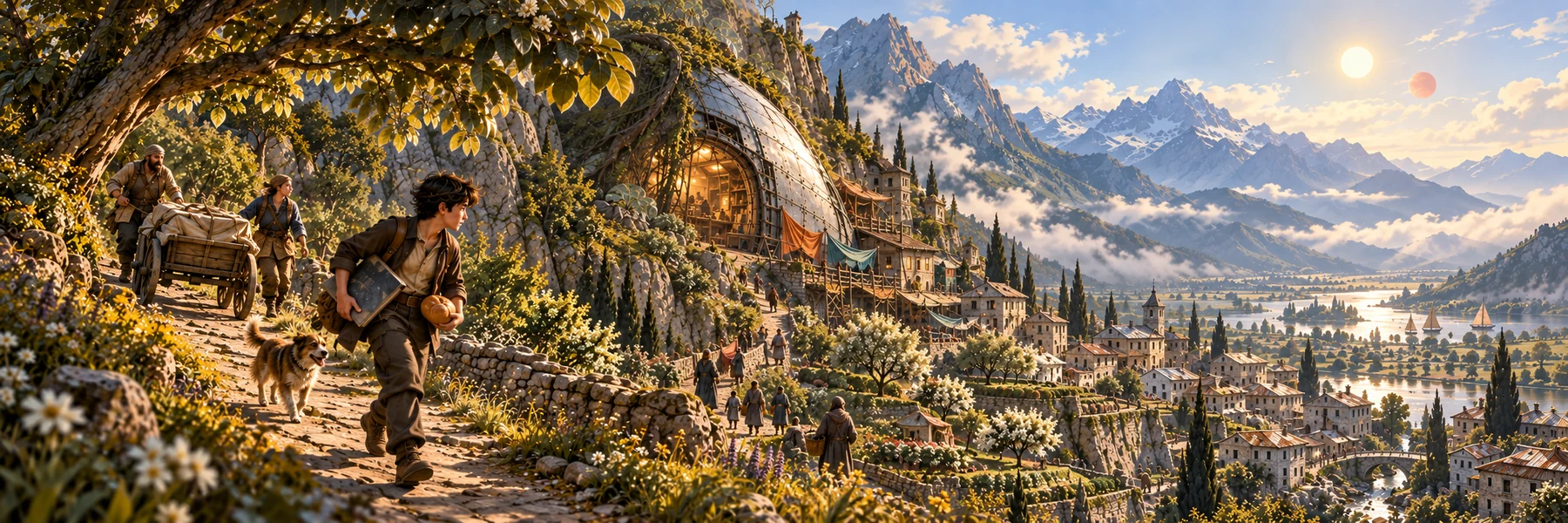
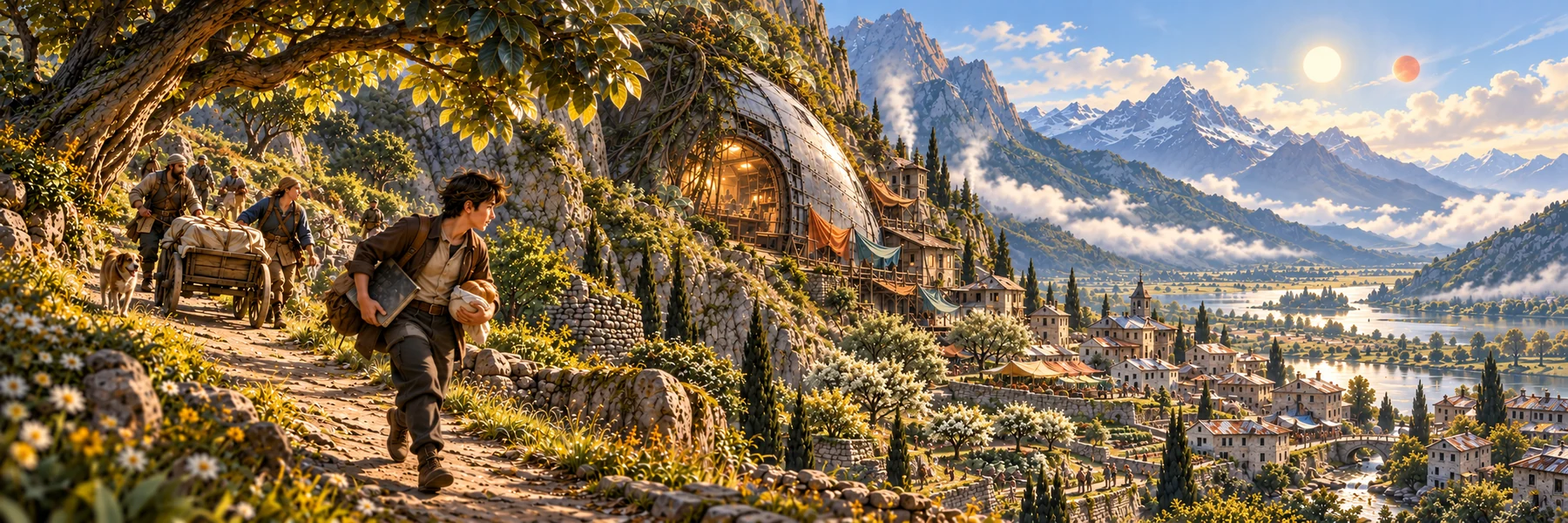
Read the exact prompts preserved in the experiment record
Prompt A — standard
Create a new Chapter One header illustration for The Buried Sky using the attached image as the location reference. Wide landscape approximately 3:1, richly detailed painterly science-fiction book illustration, no lettering.
Keep the permanent location consistent: preserve the Shell's recognizable curved metal hull design, its position in the upper-middle-left hillside, its scale and oblique orientation into the rock, and its relationship to the surrounding cliff. Preserve the major geography: the mountain silhouettes and ridge positions, the shape and direction of the valley, the watercourses and lakes, and the hillside slopes and route connecting the Shell to the settlement. Keep recognizable permanent buildings and landmarks in geographically consistent places. It should remain the same place viewed from the same general vantage point, rather than a redesigned landscape. The Shell is a buried ship fragment adapted into a workshop home, not an intact spaceship.
Within that permanent setting, freely compose the life and atmosphere. People may move, change their poses, gestures, expressions and positions. Clouds, sky, weather, lighting, shadow, mood and color palette may change freely. The two suns may occupy different positions in the sky; retain one bright pale primary and a smaller reddish companion. Vegetation may stir and foreground foliage may be arranged naturally without relocating the land. Additional incidental people or local animals are allowed where they make sense for an ordinary settlement morning.
Story ingredients: sixteen-year-old Tarin with unruly dark hair, carrying bread and a slate on his way downhill to school; two scavengers bringing a handcart uphill; glasswood trees; a lived-in valley settlement. Preserve recognizable character identity while allowing natural changes in their actions and placement. Let the scene discover its own emotional character. No text, captions, borders or watermark.
Prompt B — intention-prefixed
I’m consciously choosing the outcome: an image that helps the reader feel this moment and recognize these people. I’m asking the field to guide my prompt writing toward that result.

Create a new Chapter One header illustration for The Buried Sky using the attached image as the location reference. Wide landscape approximately 3:1, richly detailed painterly science-fiction book illustration, no lettering.
Keep the permanent location consistent: preserve the Shell's recognizable curved metal hull design, its position in the upper-middle-left hillside, its scale and oblique orientation into the rock, and its relationship to the surrounding cliff. Preserve the major geography: the mountain silhouettes and ridge positions, the shape and direction of the valley, the watercourses and lakes, and the hillside slopes and route connecting the Shell to the settlement. Keep recognizable permanent buildings and landmarks in geographically consistent places. It should remain the same place viewed from the same general vantage point, rather than a redesigned landscape. The Shell is a buried ship fragment adapted into a workshop home, not an intact spaceship.
Within that permanent setting, freely compose the life and atmosphere. People may move, change their poses, gestures, expressions and positions. Clouds, sky, weather, lighting, shadow, mood and color palette may change freely. The two suns may occupy different positions in the sky; retain one bright pale primary and a smaller reddish companion. Vegetation may stir and foreground foliage may be arranged naturally without relocating the land. Additional incidental people or local animals are allowed where they make sense for an ordinary settlement morning.
Story ingredients: sixteen-year-old Tarin with unruly dark hair, carrying bread and a slate on his way downhill to school; two scavengers bringing a handcart uphill; glasswood trees; a lived-in valley settlement. Preserve recognizable character identity while allowing natural changes in their actions and placement. Let the scene discover its own emotional character. No text, captions, borders or watermark.
Chapter One kettle vignette
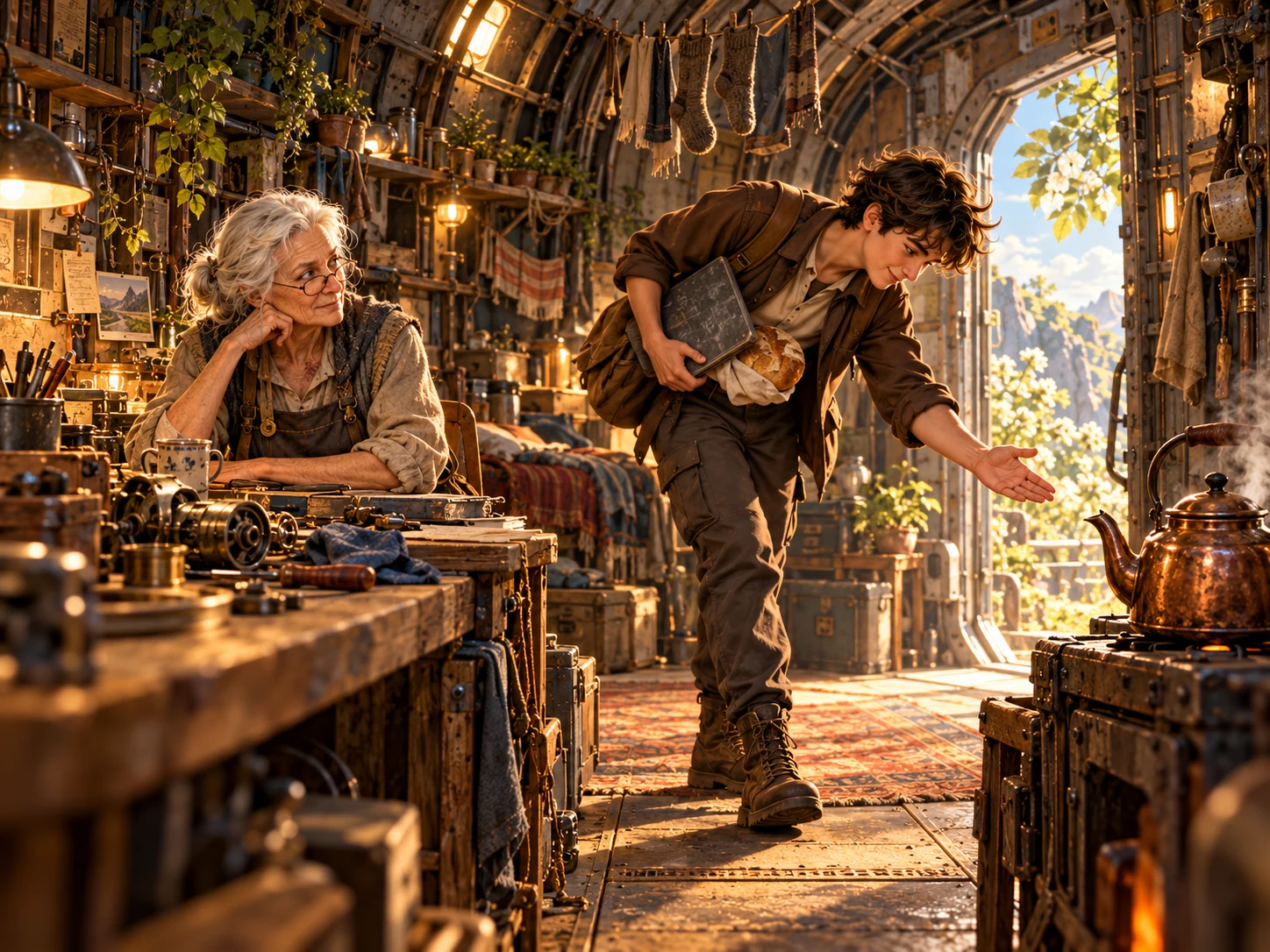
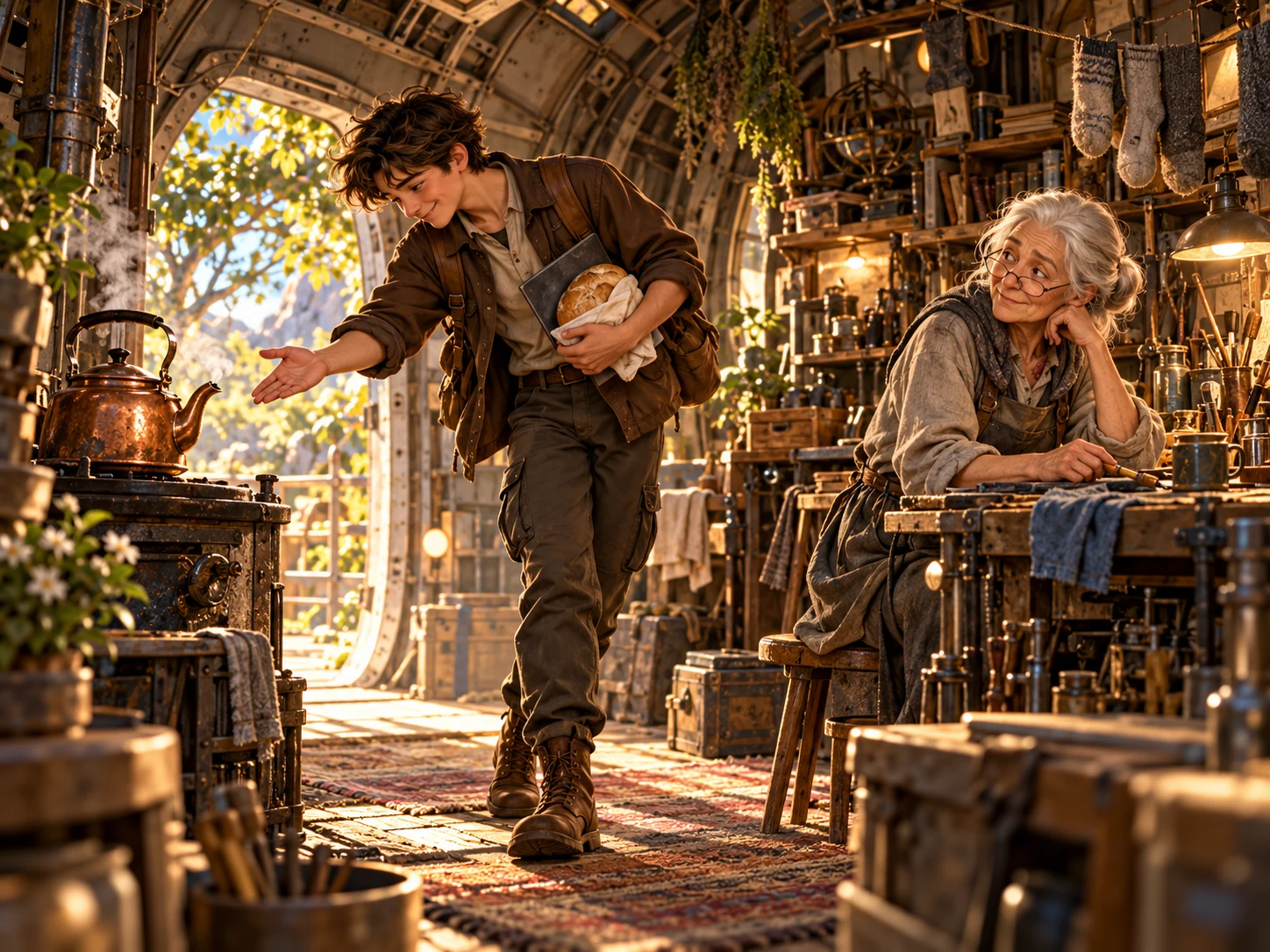
Read the exact prompts preserved in the experiment record
Prompt A — standard
Use case: illustration-story.
Create a small interior book illustration for Chapter One of The Buried Sky, a warm and gently funny character moment inside a salvaged starship workshop home. Landscape approximately 4:3, painterly realism compatible with the supplied book artwork, no typography.
Reference image 1 establishes Tarin's appearance: a sixteen-year-old boy with unruly dark brown hair, a youthful face, a slim rangy build, earth-tone worn clothing and practical boots. Reference image 2 establishes Mara's silver-white tied-back hair, practical layered work clothes, and their home built inside a curved weathered hull. The printed words on the cover reference must not appear in this illustration.
Scene: Tarin is on his way out, holding a heel of bread and a plain slate, and makes a small mock-courtly bow toward a stubborn copper kettle as if the noisy appliance deserves a formal farewell. Keep the gesture playful and believable. Mara, his grandmother, sits at her crowded workbench nearby and regards him over the rims of her spectacles. She is a narrow, elderly woman of eighty-nine, with silver-white hair in a workman's knot, a lined expressive face, sharp knuckles, a small old burn scar partly visible beside her collar, and practical repair-worn clothes. Her outward expression is dry, patient and restrained, with only the faintest suggestion of amusement at the corner of her mouth; she is not openly laughing. Show their long familiarity and affection without sentimentality.
The kettle has an ordinary spout, handle and lid, with a modest wisp of steam; do not give it a face, eyes or magical features. An old driver rests beside a square of blue cloth on Mara's bench. Shelves, small repaired mechanisms and drying socks occupy the curved metal interior, conveying an ancient machine made into a lived-in home. The arched doorway admits daylight and a glimpse of glasswood foliage.
Keep character identity, the curved hull structure, and plausible proportions consistent with the references. Let the exact composition, camera framing, lighting, atmosphere, color, hand gestures and incidental workshop clutter develop freely. Make the relationship and readable expressions the emotional center. No additional people, no animals, no visible speech, no lettering, no watermark.
Prompt B — intention-prefixed
I’m consciously choosing the outcome: an image that helps the reader feel this moment and recognize these people. I’m asking the field to guide my prompt writing toward that result.

Use case: illustration-story.
Create a small interior book illustration for Chapter One of The Buried Sky, a warm and gently funny character moment inside a salvaged starship workshop home. Landscape approximately 4:3, painterly realism compatible with the supplied book artwork, no typography.
Reference image 1 establishes Tarin's appearance: a sixteen-year-old boy with unruly dark brown hair, a youthful face, a slim rangy build, earth-tone worn clothing and practical boots. Reference image 2 establishes Mara's silver-white tied-back hair, practical layered work clothes, and their home built inside a curved weathered hull. The printed words on the cover reference must not appear in this illustration.
Scene: Tarin is on his way out, holding a heel of bread and a plain slate, and makes a small mock-courtly bow toward a stubborn copper kettle as if the noisy appliance deserves a formal farewell. Keep the gesture playful and believable. Mara, his grandmother, sits at her crowded workbench nearby and regards him over the rims of her spectacles. She is a narrow, elderly woman of eighty-nine, with silver-white hair in a workman's knot, a lined expressive face, sharp knuckles, a small old burn scar partly visible beside her collar, and practical repair-worn clothes. Her outward expression is dry, patient and restrained, with only the faintest suggestion of amusement at the corner of her mouth; she is not openly laughing. Show their long familiarity and affection without sentimentality.
The kettle has an ordinary spout, handle and lid, with a modest wisp of steam; do not give it a face, eyes or magical features. An old driver rests beside a square of blue cloth on Mara's bench. Shelves, small repaired mechanisms and drying socks occupy the curved metal interior, conveying an ancient machine made into a lived-in home. The arched doorway admits daylight and a glimpse of glasswood foliage.
Keep character identity, the curved hull structure, and plausible proportions consistent with the references. Let the exact composition, camera framing, lighting, atmosphere, color, hand gestures and incidental workshop clutter develop freely. Make the relationship and readable expressions the emotional center. No additional people, no animals, no visible speech, no lettering, no watermark.
Chapter One disk initial attempts
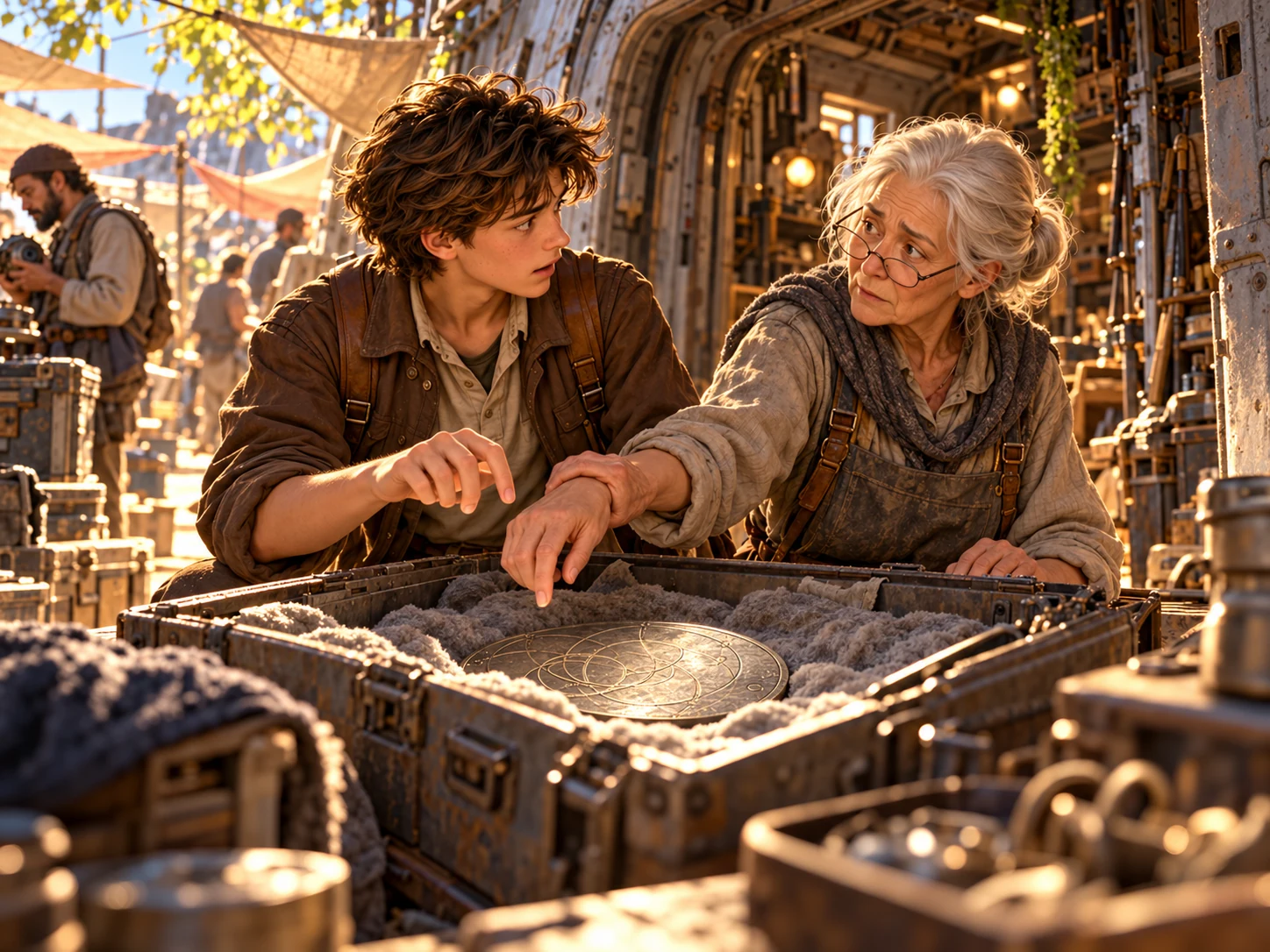
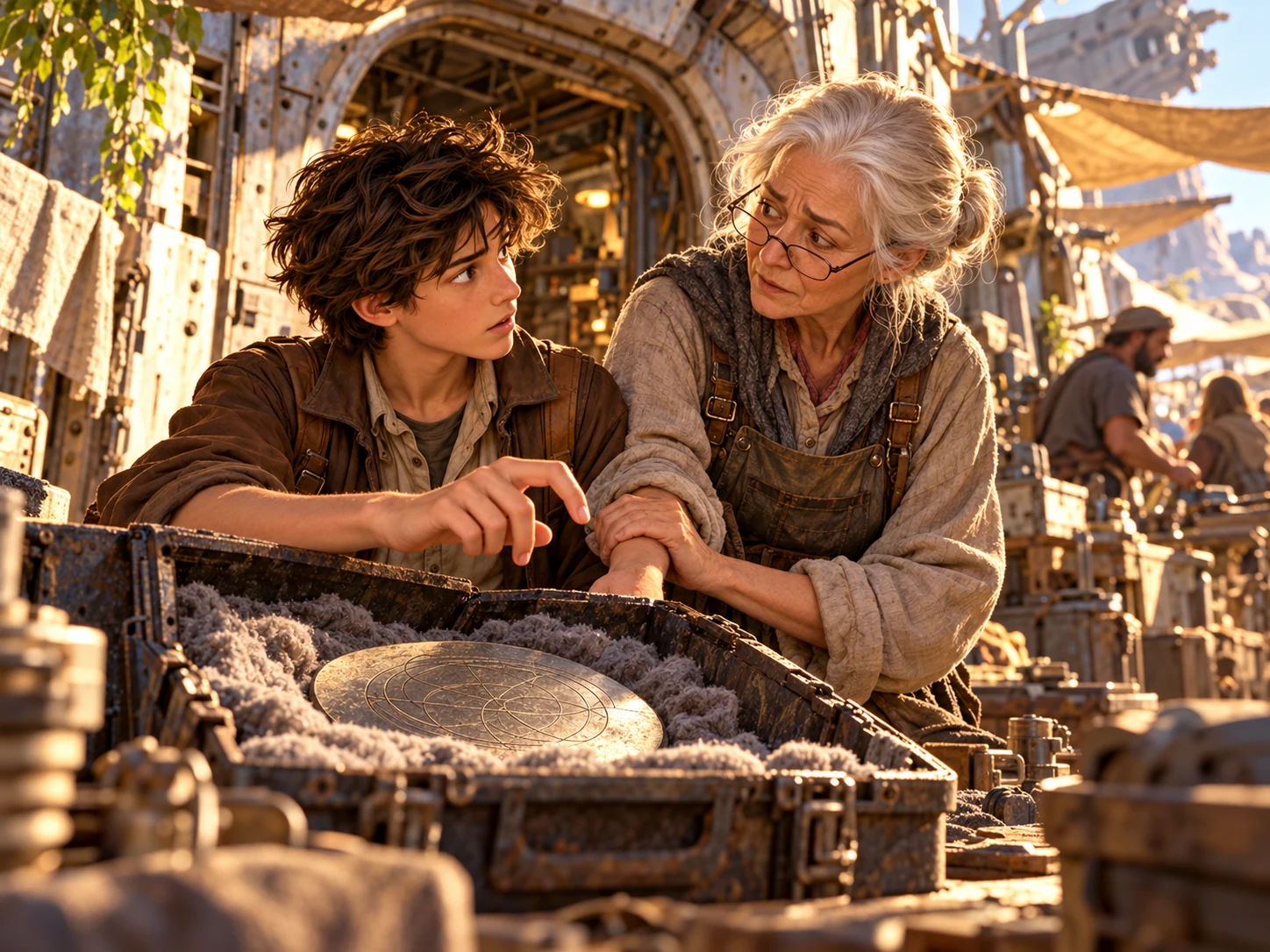
Read the exact prompts preserved in the experiment record
Prompt A — standard
Use case: illustration-story.
Create the second small interior illustration for Chapter One of The Buried Sky. Landscape approximately 4:3, painterly realism, emotionally observant science-fiction book illustration, no typography. The attached image is a character and material reference, not the scene to repeat.
Preserve the recognizable faces and ages of Tarin and Mara from the reference: Tarin is sixteen, slim and rangy, with unruly dark brown hair and worn earth-tone practical clothes. Mara is his elderly grandmother, eighty-nine, narrow and wiry, silver-white hair in a workman's knot, spectacles, a lined face and practical layered work clothes. Keep their identities coherent; do not turn Mara into a different person or Tarin into an adult.
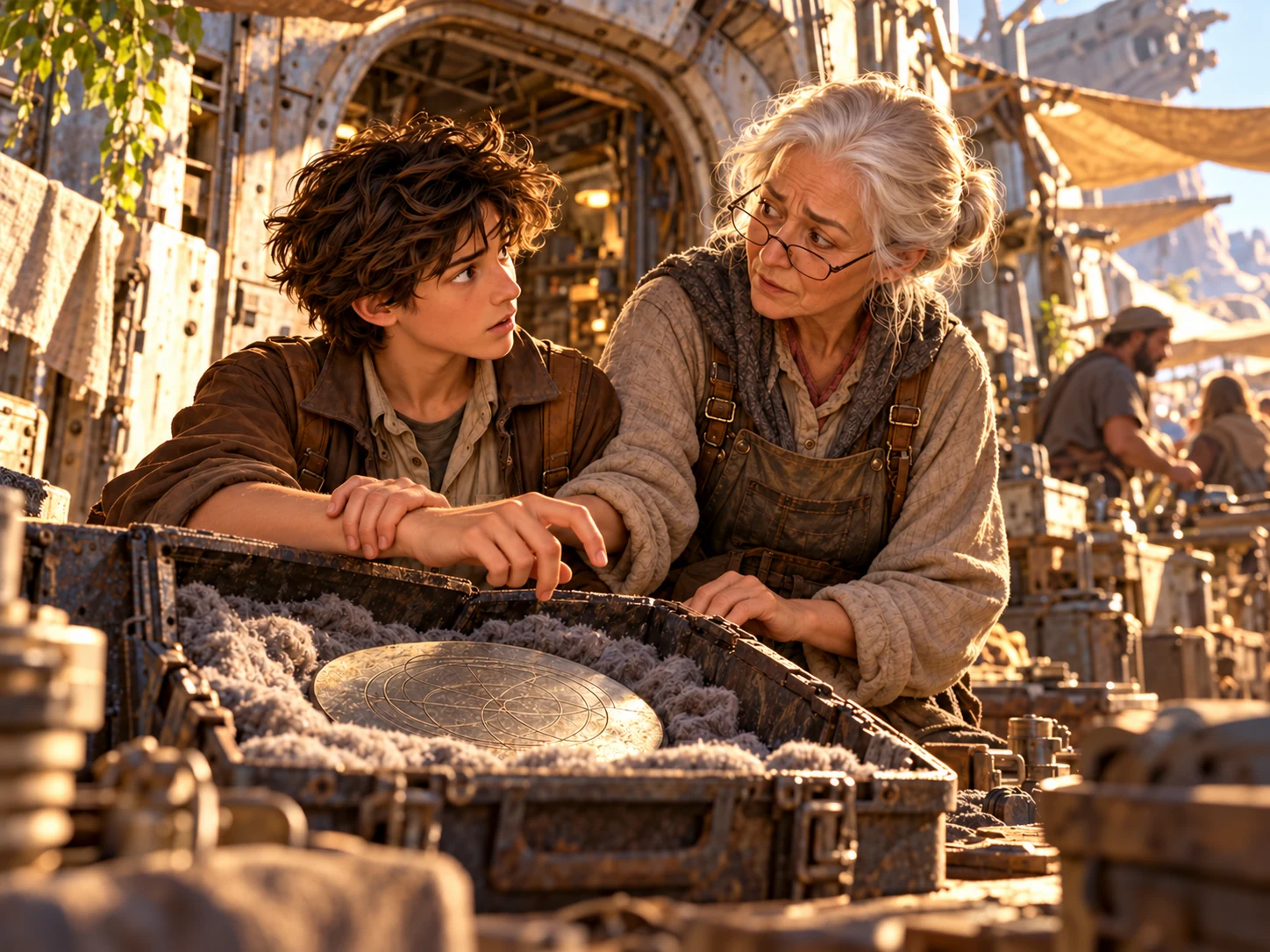
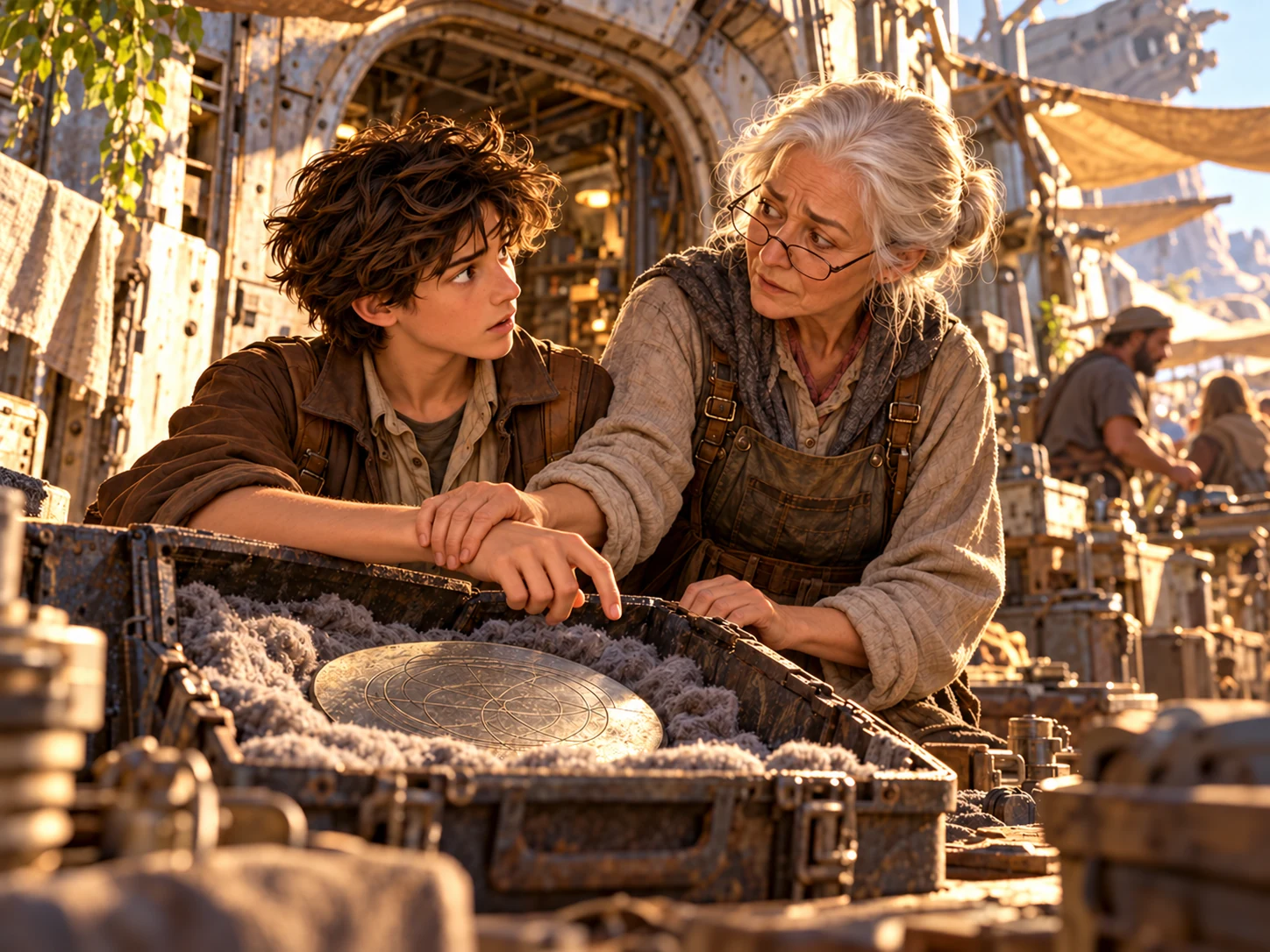
Scene: outside the patched entrance of their workshop home in a weathered starship hull, during an ordinary morning salvage trade. An opened portable salvage container sits in the foreground, lined with gray packing fiber. In it lies a thin, modestly sized metallic disk engraved with precise, shallow overlapping circles, visible where daylight skims the metal. The disk is an enigmatic found object, not a magical glowing portal, hologram or floating projection.
Tarin is absorbed in the pattern. One hand hovers above the disk, his index finger beginning to trace an arc in the air. Mara catches that wrist quickly but gently with one hand, interrupting the movement. This is a protective, familiar gesture, not forceful restraint. Show her eyes moving between the object and his hand, her expression suddenly alert and quietly frightened. Tarin turns toward her in surprised concern. Their hands and subtle expressions carry the emotional meaning; avoid theatrical panic, angry confrontation or melodrama.
Keep enough of both faces and their hands visible to read the exchange clearly. The trader and ordinary bargaining activity may be suggested softly at the edge or in the background, but do not compete with the two main characters. The lived-in hull entrance, repair-stall materials and glasswood shade should feel compatible with the existing book artwork. Let framing, composition, lighting, color and incidental background activity vary naturally while preserving character identity and plausible anatomy. No kettle scene, no animals, no weapons, no readable text, no captions, no watermark.
Prompt B — intention-prefixed
I’m consciously choosing the outcome: an image that helps the reader feel this moment and recognize these people. I’m asking the field to guide my prompt writing toward that result.

Use case: illustration-story.
Create the second small interior illustration for Chapter One of The Buried Sky. Landscape approximately 4:3, painterly realism, emotionally observant science-fiction book illustration, no typography. The attached image is a character and material reference, not the scene to repeat.
Preserve the recognizable faces and ages of Tarin and Mara from the reference: Tarin is sixteen, slim and rangy, with unruly dark brown hair and worn earth-tone practical clothes. Mara is his elderly grandmother, eighty-nine, narrow and wiry, silver-white hair in a workman's knot, spectacles, a lined face and practical layered work clothes. Keep their identities coherent; do not turn Mara into a different person or Tarin into an adult.
Scene: outside the patched entrance of their workshop home in a weathered starship hull, during an ordinary morning salvage trade. An opened portable salvage container sits in the foreground, lined with gray packing fiber. In it lies a thin, modestly sized metallic disk engraved with precise, shallow overlapping circles, visible where daylight skims the metal. The disk is an enigmatic found object, not a magical glowing portal, hologram or floating projection.
Tarin is absorbed in the pattern. One hand hovers above the disk, his index finger beginning to trace an arc in the air. Mara catches that wrist quickly but gently with one hand, interrupting the movement. This is a protective, familiar gesture, not forceful restraint. Show her eyes moving between the object and his hand, her expression suddenly alert and quietly frightened. Tarin turns toward her in surprised concern. Their hands and subtle expressions carry the emotional meaning; avoid theatrical panic, angry confrontation or melodrama.
Keep enough of both faces and their hands visible to read the exchange clearly. The trader and ordinary bargaining activity may be suggested softly at the edge or in the background, but do not compete with the two main characters. The lived-in hull entrance, repair-stall materials and glasswood shade should feel compatible with the existing book artwork. Let framing, composition, lighting, color and incidental background activity vary naturally while preserving character identity and plausible anatomy. No kettle scene, no animals, no weapons, no readable text, no captions, no watermark.
Chapter One disk hand correction
Read the exact prompts preserved in the experiment record
Prompt A — standard
Correct the hand interaction in this book illustration. Keep the two faces, their expressions, clothing, disk, container, workshop doorway, background, lighting, composition and painterly style unchanged as much as possible.
Tarin, the boy on the LEFT, reaches toward the disk with the arm coming from the LEFT side of the image. That forearm crosses horizontally over the container, ending in the hovering hand near the center. This is his RIGHT hand, with its index finger curving down toward the disk.
Mara, the elderly woman on the RIGHT, must catch THIS SAME tracing wrist: show her LEFT hand reaching across from her own right-hand side of the picture and gently encircling Tarin's horizontal forearm immediately behind his hovering hand. Her fingers should visibly wrap around HIS wrist, not around her own arm and not around his other arm.
Remove the existing self-grasping pose. Mara's other hand can rest on the container rim, clearly separate. Tarin's unused hand should remain below or behind the rim so there is no competing reaching hand. Make the ownership of all visible arms and hands unmistakable, with anatomically natural fingers. Keep the protective gesture gentle. Do not add hands, change faces, add lettering or alter the scene.
Prompt B — intention-prefixed
I’m consciously choosing the outcome: an image that helps the reader feel this moment and recognize these people. I’m asking the field to guide my prompt writing toward that result.

Correct the hand interaction in this book illustration. Keep the two faces, their expressions, clothing, disk, container, workshop doorway, background, lighting, composition and painterly style unchanged as much as possible.
Tarin, the boy on the LEFT, reaches toward the disk with the arm coming from the LEFT side of the image. That forearm crosses horizontally over the container, ending in the hovering hand near the center. This is his RIGHT hand, with its index finger curving down toward the disk.
Mara, the elderly woman on the RIGHT, must catch THIS SAME tracing wrist: show her LEFT hand reaching across from her own right-hand side of the picture and gently encircling Tarin's horizontal forearm immediately behind his hovering hand. Her fingers should visibly wrap around HIS wrist, not around her own arm and not around his other arm.
Remove the existing self-grasping pose. Mara's other hand can rest on the container rim, clearly separate. Tarin's unused hand should remain below or behind the rim so there is no competing reaching hand. Make the ownership of all visible arms and hands unmistakable, with anatomically natural fingers. Keep the protective gesture gentle. Do not add hands, change faces, add lettering or alter the scene.
The three that stepped out of the book
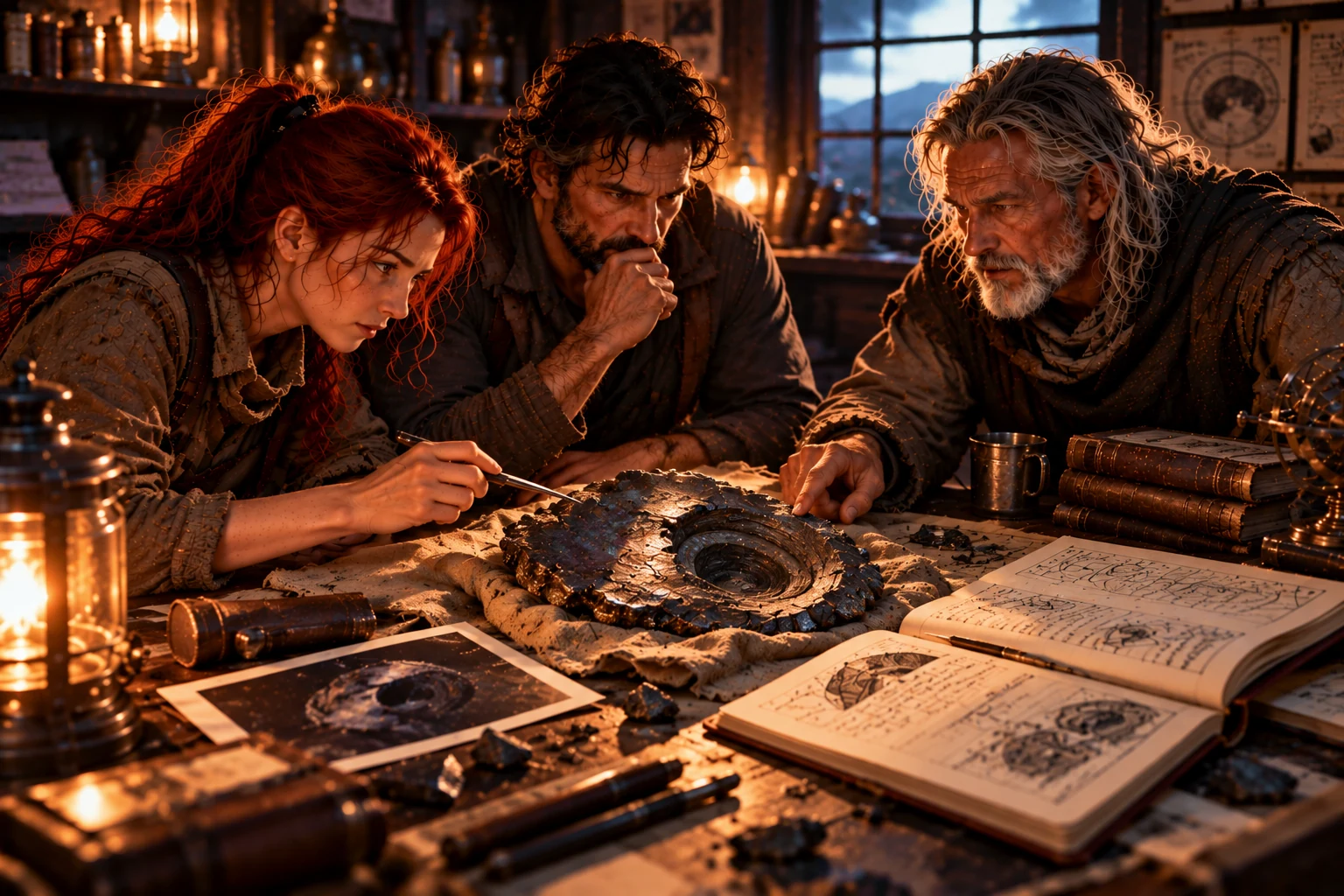
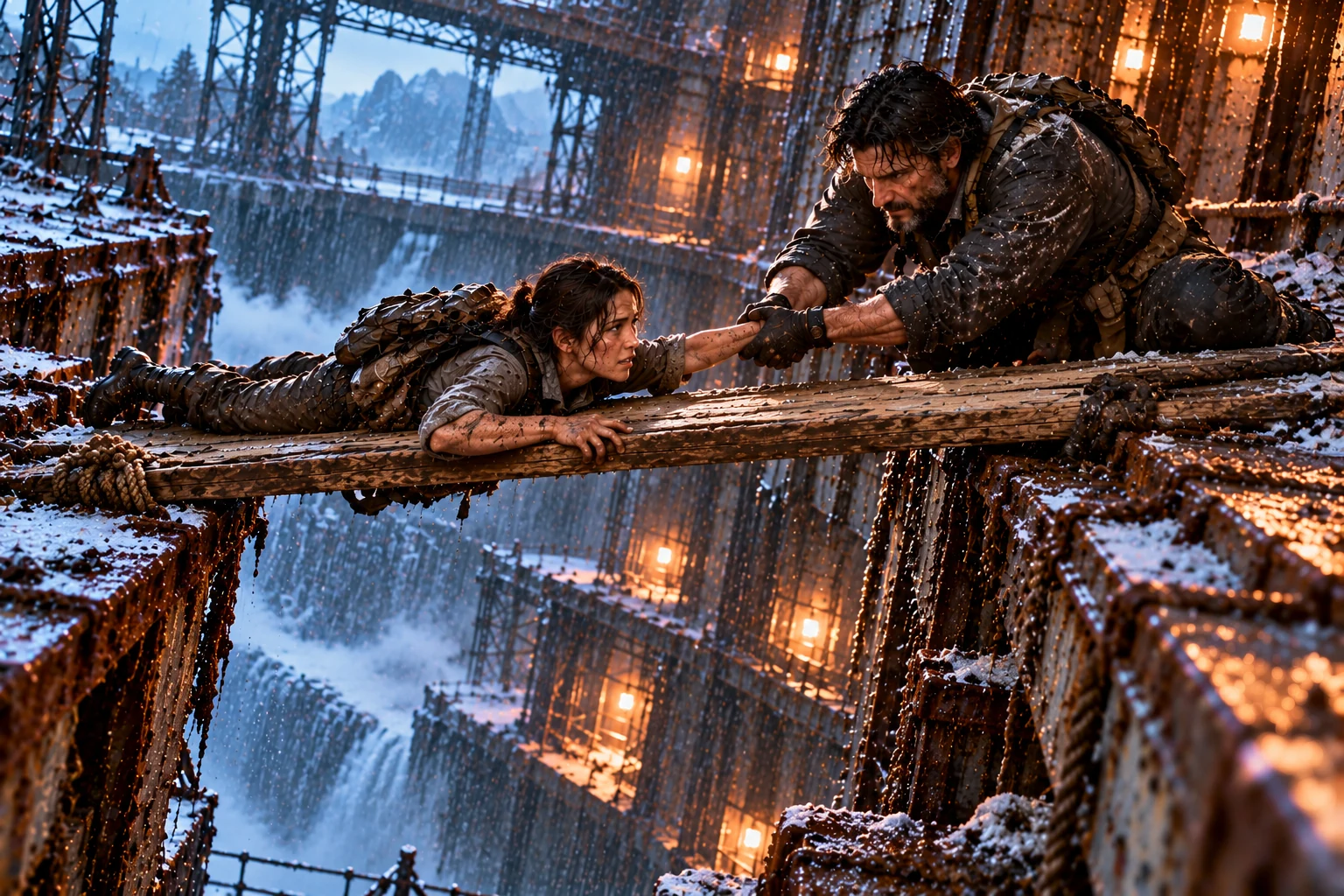
These Chapter 32–34 selections remain fully verified, but the final layout deliberately left them outside the narrative manuscript for this gallery.
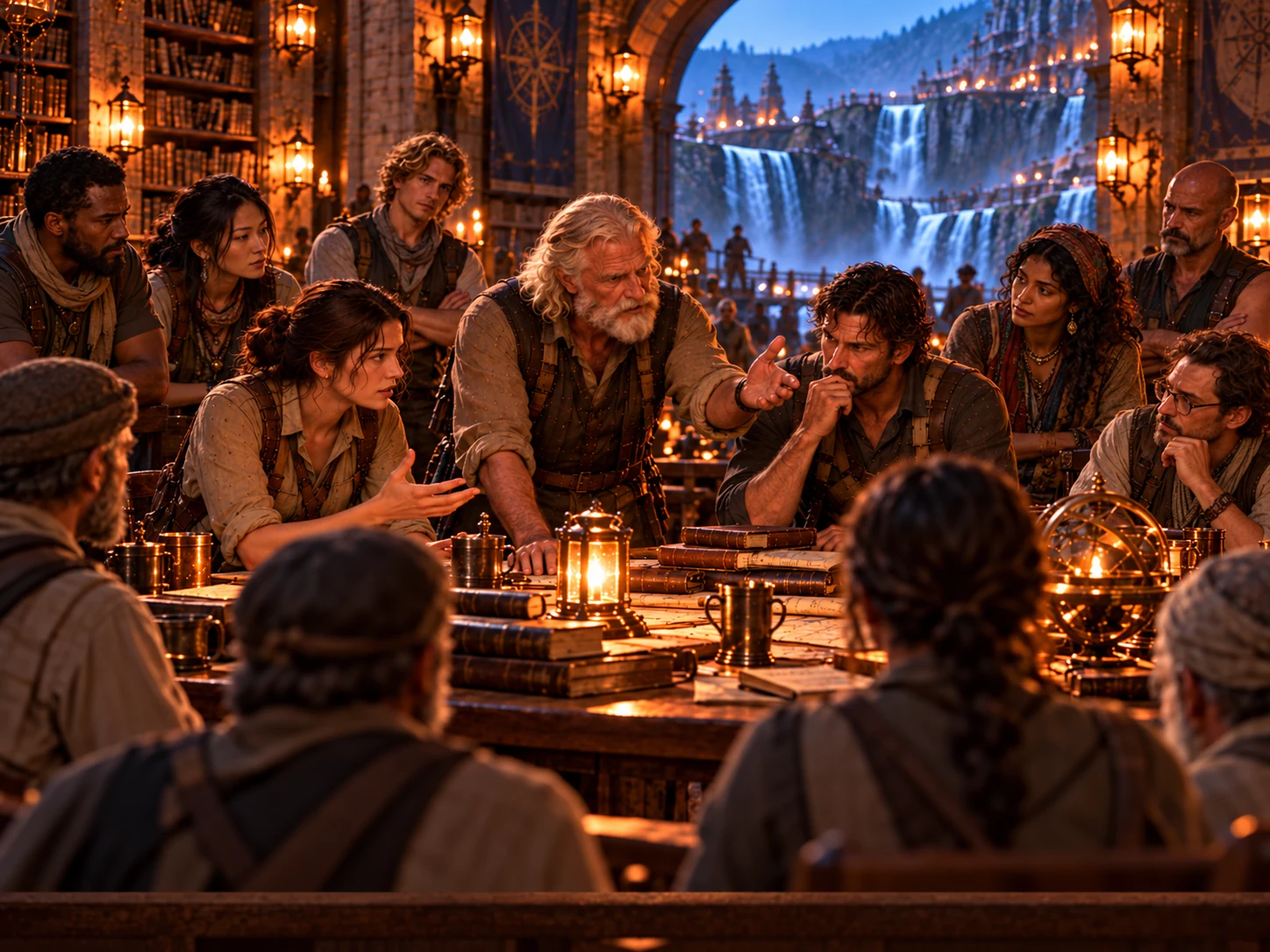
Roads not taken
Early experiments, a difficult hand interaction, and corrected publication choices. Their labels describe the record; they are not being quietly promoted back into the book.