Stable Diffusion: A New Way to Create Images with AI
Stable Diffusion is an AI image-generation system that can turn a written description into an image. That description can be anything from a photograph of a person or landscape to something much harder to photograph—an imagined machine, geometric structure, field pattern, or abstract idea.
The basic concept behind it is surprisingly interesting.
Stable Diffusion does not begin with a blank canvas and draw objects onto it one at a time. It begins with noise—essentially visual randomness in a compressed mathematical space. Your text prompt is converted into information the model can use as guidance, and the system repeatedly works through that noise, predicting what should be removed or changed to make the remaining structure better correspond to the description. After a number of these steps, the resulting mathematical representation is decoded into the image we see.
So, in a very simplified sense:
Noise → guided denoising → structure → image.
The prompt doesn’t tell the machine where to place every pixel. It provides the conditions that steer the process.
Something I Learned Along the Way
One of the most useful things I’ve discovered is that I often get better results when I don’t write the Stable Diffusion prompt myself.
Instead, I explain to an AI chatbot what I’m trying to see.
I can describe the idea normally—what the object is supposed to represent, how I imagine it positioned, what should be emphasized, what absolutely should not appear, whether I want something photographic, technical, abstract, three-dimensional, and so forth. I then ask the chatbot to translate my description into a prompt designed specifically for image generation.
I also ask it to recommend any settings that might matter for what I’m attempting: image dimensions, number of sampling steps, guidance strength, sampler or scheduler, negative prompts, and other options available in the particular Stable Diffusion interface I’m using.
Then I generate an image, look at what went wrong, explain that result back to the chatbot, and refine the prompt.
Idea → conversation → image prompt → generation → observation → refinement.
For me, this has worked considerably better than trying to learn a long list of magic prompt words and hoping I arrange them correctly. I concentrate on describing what I’m trying to communicate; the language model concentrates on translating that into instructions the image model is more likely to understand.
The combination has become much more useful to me than either tool by itself.
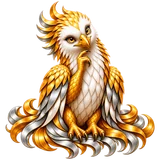
Below is a screenshot of the Stable Diffusion interface I use, followed by a gallery of some of the images I’ve produced while experimenting with it—from Chladni-like patterns and geometric structures to photorealistic images.

Here is a gallery of images we have created with this software so far, from chladni plate type to photorealistic